
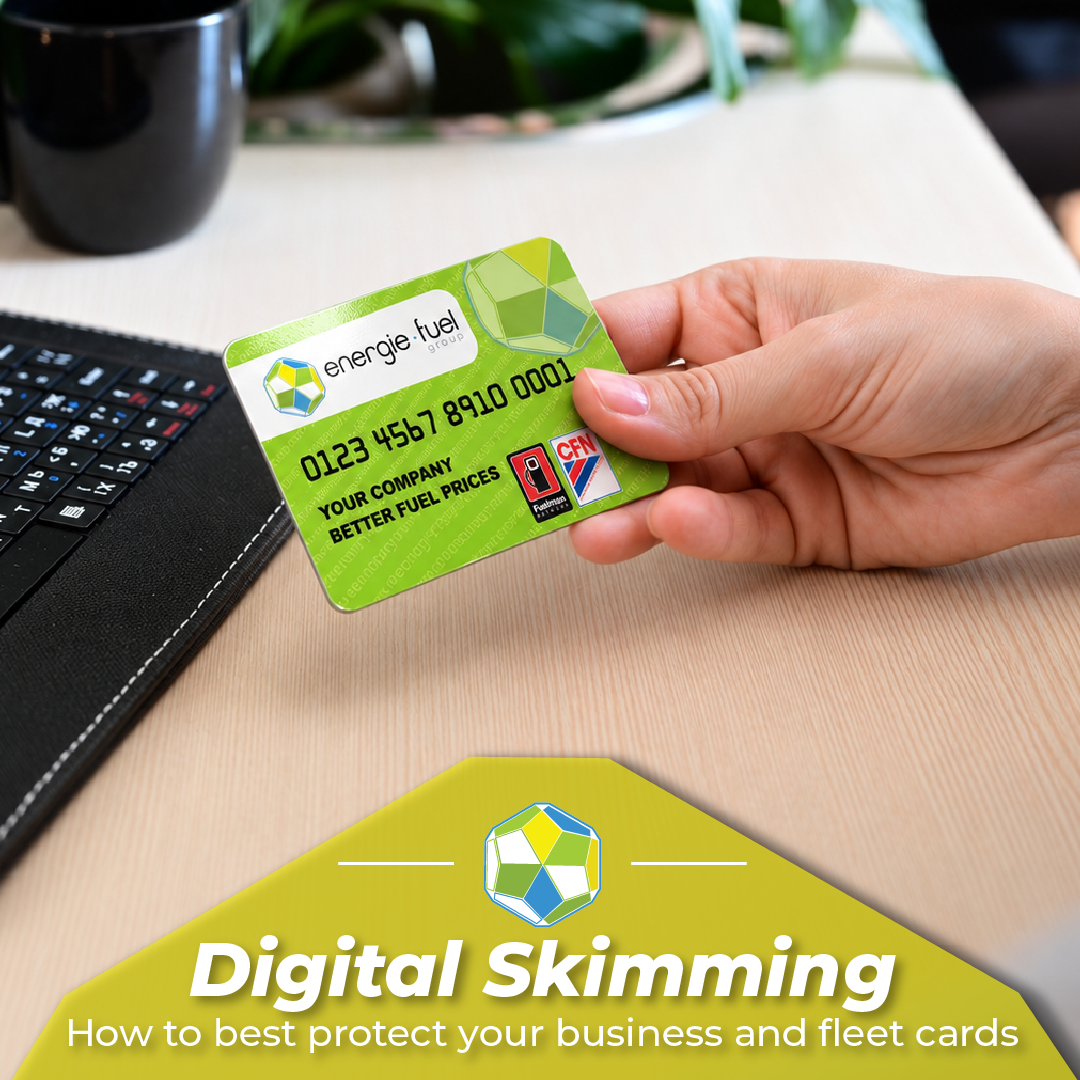
 When times get tough, we often see scammers get very creative. We’ve especially seen this happen because of the rising fuel costs in 2026. Card skimming has been evolving rapidly with the help of technology and AI. While physical card skimmers at gas stations are still a problem, nowadays these scammers are much smarter and sneakier. Instead of traditional skimmers, we’ve been seeing a rise in what is referred to as digital skimming (also known as e-skimming and web skimming).
Digital skimming occurs when attackers compromise a website by exploiting software vulnerabilities or security weaknesses, such as weak passwords. From there, they insert malicious JavaScript and collect information digitally. This makes digital skimming much more difficult to detect than physical skimming, and it can collect more information in one go. In the fuel card industry, we’ve seen this take place in the form of collecting fuel card numbers and PINs. So, how do you protect yourself?
Stay Vigilant
The first tip we have is to stay vigilant when it comes to your transactions. With Energie Fuel, you receive detailed EFT statements and invoices. Fuel cards collect much more data to help you properly manage your fleet and all your company’s fuel-related expenses. Everything from the merchant’s name, date of purchase, time, gallons, price, fuel type, driver name, vehicle number, and odometer reading is captured.
This makes it easier to spot a suspicious transaction and identify potential fuel card fraud.
Fuel Card Controls
Another tool provided by Energie Fuel to add an extra layer of protection is fuel card controls. We just posted a more in-depth article about fuel card controls, but utilizing these settings provided by Energie Fuel and other fuel card providers is a must.
The two settings we highly recommend are state and ZIP code restrictions. These two fuel card controls can help prevent fraudulent transactions from going through and affecting your business.
Blocking states is a very basic but incredibly useful setting. We recommend blocking every state that your fleet doesn’t travel to. If your business only operates in California, for example, then the card should ideally only have the State of California open. For businesses that travel out of state, we recommend only authorizing the states along your drivers’ routes.
A more aggressive control is blocking ZIP codes. This can be used to limit the retail sites where drivers are allowed to fuel and can also help protect your fuel cards from areas where there has been a history of card skimming.
PIN Habits
A card’s PIN is the key to a lock, and much like a physical key, you also need to keep digital keys safe. In the fuel card world, this means only a few parties should know the PINs: the owner, fleet manager, driver, and fuel card provider. If a driver leaves the company, the fuel card provider should be notified immediately to deactivate both the card and PIN.
We also highly recommend choosing a secure PIN. Avoid easy PIN sequences such as 12345, repeating numbers such as 11111, and dates of birth.
We also recommend not using the same PIN for every card. Much like passwords, PINs should be unique to each card you own. You can also update your PIN every 3–6 months to add an extra layer of security.
Practicing “Good Digital Hygiene”
Mastercard uses the term “good digital hygiene” to describe the cybersecurity habits you should routinely adopt to add another level of protection. This means setting strong and unique passwords for every account you may have, but especially any account that may contain sensitive or financial information.
According to CISA (Cybersecurity and Infrastructure Security Agency), passwords should be at least 16 characters long and contain a random mix of uppercase and lowercase letters, numbers, and symbols. They also recommend that each password only be used for one account. Whenever possible, use multifactor authentication (MFA) or two-factor authentication (2FA). According to CISA, MFA and 2FA add a critical layer of security even if a password is stolen.
To add an extra layer of security, global cybersecurity company McAfee recommends routinely changing your password every three months. They also point out scenarios such as data breaches or employees leaving the company as situations that warrant an immediate password change.
Lastly, using a VPN (virtual private network) when connecting to public Wi-Fi networks should also be part of your “good digital hygiene,” according to Mastercard. The role of a VPN is to help ensure that data is encrypted and protected from ISPs (Internet Service Providers) and other third parties.
The New Jersey Cybersecurity & Communications Integration Cell describes it as: “VPNs establish secure connections by encrypting data and using virtual IP addresses so that the user’s digital footprint and browsing activity cannot be accessed by ISPs.”
Energie Fuel takes fuel card security very seriously. Not only are we backed by Corpay and IRIS security tools, but we also closely monitor transactions to help ensure that your cards remain safe. If our team notices a transaction attempt that falls outside the normal pattern for your business, we will consult with you to verify whether the transaction was legitimate or potentially fraudulent.
While digital skimming is a growing danger, hopefully these tips and our guidance will help lead you toward safer cybersecurity and fuel card practices.