
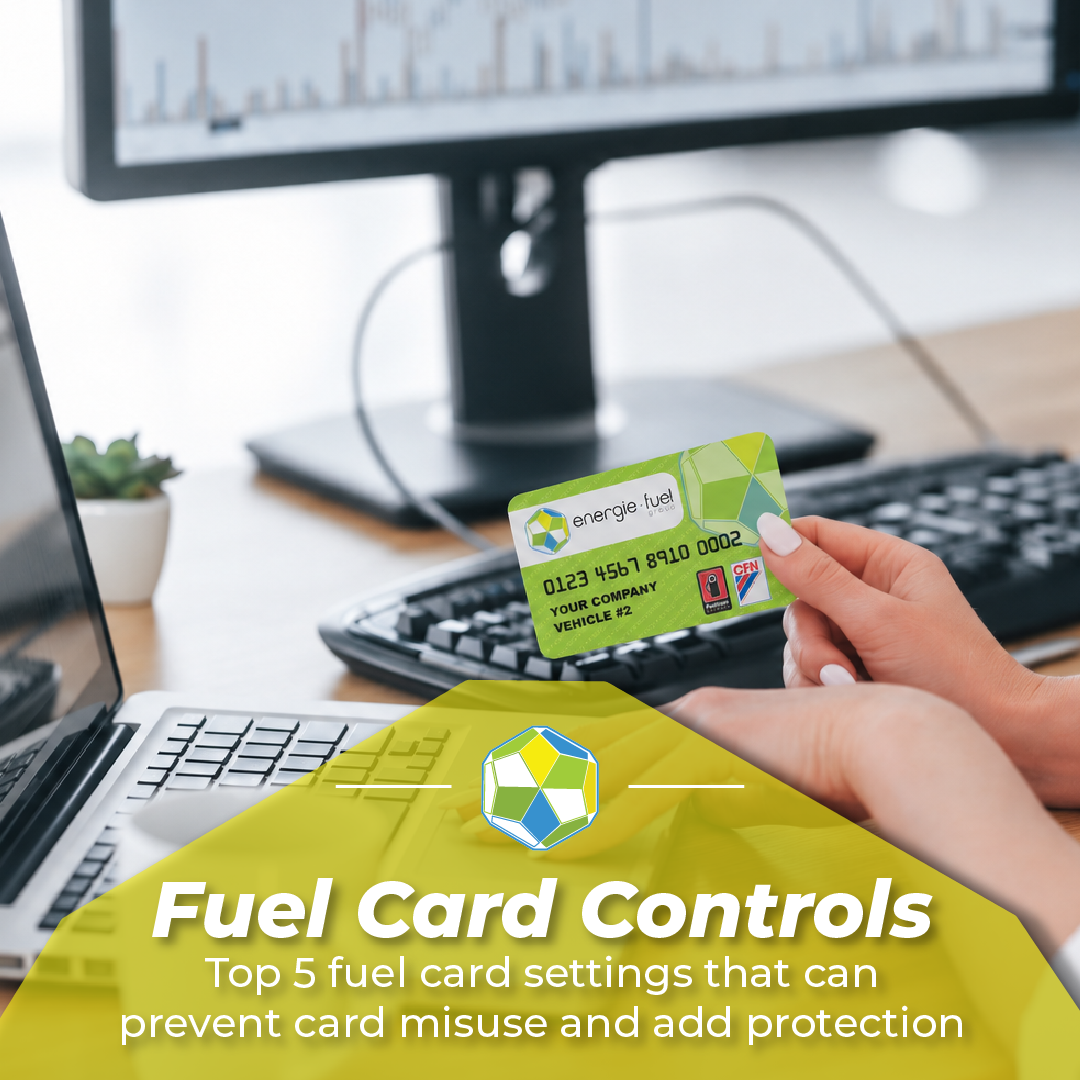
 With the rise in fuel costs, mismanagement of your fleet’s spending can have an even bigger impact on the company’s budget. While a little misuse of fuel cards may not seem like a big deal at first, a few unauthorized purchases or using a fuel card on a personal vehicle can really add up over time.
Fuel cards are designed to help reduce fuel costs and provide better control over fuel-related expenses. Here are five fuel card controls that can significantly help reduce fuel card misuse, improve accountability, and ultimately save your business money.
1) Transaction Limits
This is perhaps the most straightforward fuel card control, but it can be very useful when set up correctly. Transaction limits control the number of fuel transactions permitted on each card per day.
It is one of the most useful limits because it requires no additional manual effort from the fleet manager. If a driver attempts to go over the transaction limit, the purchase will be denied at the pump.
We recommend being familiar with your drivers’ routes and how often they typically fuel during a normal workday. Transaction limits also go hand in hand with time parameters, which can provide even more protection against fuel theft and fuel card misuse.
2) Time Parameters
The time parameter setting gives fleet managers even greater control over when fuel cards are allowed to be used. If your fleet operates on a specific work shift or route, setting the cards to match those working hours is another great way to control fuel card usage without requiring additional manual effort.
We recommend adding a small buffer in case of traffic, delays, or a job running a little longer than expected.
For example, if a driver is only permitted to fuel Monday through Friday but attempts to use the fuel card on Saturday for a personal vehicle, the card can deny the transaction based on the time parameters set by the fleet manager.
3) Per-Fill and Gallon Limits
The per-fill limit controls how many gallons can be pumped into a vehicle during a single transaction. We recommend setting the per-fill limit to closely match the vehicle’s fuel tank size.
Daily or monthly gallon limits require a little more math and a good understanding of your fleet’s typical routes and workdays. Creating a spreadsheet that tracks the average MPG for each vehicle is a great way to begin monitoring fleet performance and determining what type of fuel limit would work best. This can also make it easier to identify unusual or out-of-pattern driver behavior and investigate it further.
You can also create a spreadsheet that tracks fuel gallons pumped versus fuel gallons consumed. This can help determine what type of daily or monthly gallon limit makes the most sense for each vehicle in your fleet.
4) Authorize Products
In addition to setting limits at the pump, fuel cards can also give fleet managers control over what drivers are allowed to purchase at gas stations.
If a driver operates a diesel vehicle during work hours, setting the card to diesel-only would be recommended. If the driver attempts to purchase anything other than the authorized fuel or product, the fleet manager can receive an alert showing what was purchased. This can also be used as a coaching opportunity if your company has strict rules regarding what can be purchased with a fuel card.
Another common way drivers use fuel cards is at convenience stores or to purchase car washes. If the company allows car or truck washes to be purchased using the fuel card, the fuel card issuer can set that service as an approved purchase.
If the company does not allow convenience store purchases, often abbreviated as C-Store, the fleet manager can receive an alert when the card is used for an unauthorized convenience store purchase.
Small convenience store purchases can add up quickly, especially for larger fleets. Product restrictions give fleet managers greater control over fuel-related spending and help prevent unnecessary expenses.
5) Blocking States and ZIP Codes
The final fuel card control we highly recommend is setting approved states based on where your fleet normally operates. This allows fuel cards to work only within designated areas.
This setting not only helps fleet managers keep better track of where drivers are allowed to fuel, but it can also be one of the most important tools for detecting potential fuel card fraud. When card skimming or other types of fuel card fraud occurs, unauthorized attempts may appear in states where the fleet does not normally operate. Setting strict state parameters can automatically deny those out-of-state transactions from going through.
If there is an unauthorized out-of-state attempt, the fleet manager can receive a fraud alert so the card can be reviewed, deactivated, and replaced if necessary.
An even stronger control is blocking certain ZIP codes, which can further limit the retail sites where drivers are allowed to fuel. For example, if a fleet manager wants drivers to use wholesale fuel sites whenever possible, but there is a ZIP code along the route where only more expensive retail sites are available, that ZIP code can be blocked to help prevent drivers from fueling there.
Fleet managers can also block ZIP codes where there has been a history of card skimming or other potential fuel card fraud.
Hopefully, this guide helps you better understand the fuel card controls available to fleet managers. These controls and limits are not designed to make things more difficult for your fleet. They are designed to help you better manage fuel-related spending, protect your company, and improve accountability within your fleet.
They can also create valuable coaching opportunities by helping fleet managers identify unusual fuel purchases or driver behavior before those expenses become a larger problem.
If you have questions about fuel cards or which fuel card controls would work best for your company, contact Energie Fuel to learn how the Energie Fuel Card can help you manage your fleet’s fuel needs.