
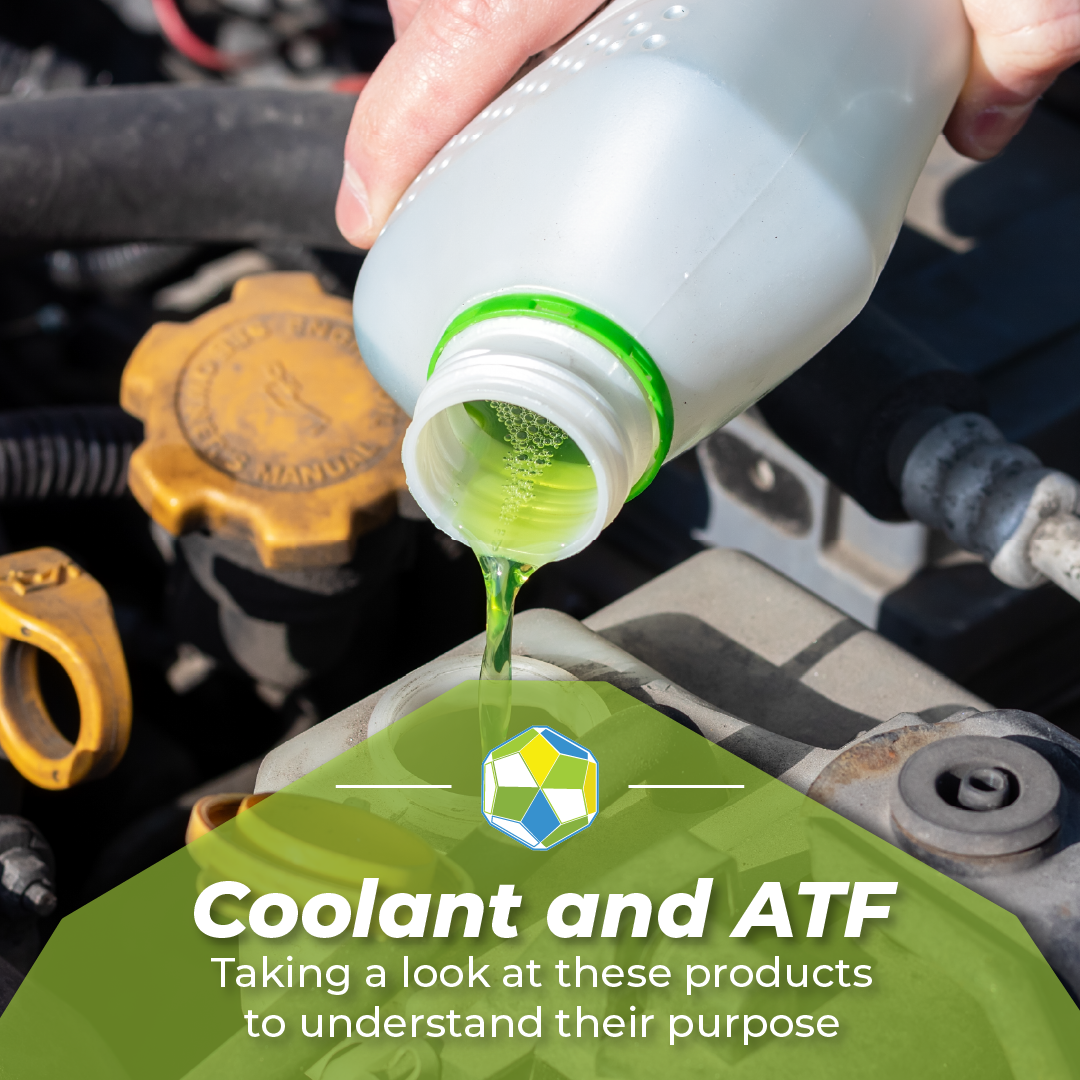
 There are many different fluids that help your vehicle run properly and maintain its overall health. From motor oil to coolant and even brake fluid, it’s important to understand what each of these vehicle fluids is and its purpose. Two fluids we often see people confusing are coolant and ATF (automatic transmission fluid).
In this article, we’ll explain the differences between coolant and ATF and take a closer look at the purpose of each fluid.
What Is Coolant?
The main role of coolant, often referred to as antifreeze, is to help prevent engine failure caused by overheating. Coolant helps regulate engine temperature and absorb excess heat generated during the combustion process. It also helps protect the engine from freezing if you live in an area with extremely cold weather.
Many coolants are formulated with ethylene glycol, which helps prevent the cooling system from freezing, hence why coolant is often called “antifreeze.” Apart from regulating temperature, coolant also provides lubrication and helps protect the cooling system against corrosion.
What Is Automatic Transmission Fluid (ATF)?
This brings us to transmission fluid, or ATF. Transmission fluid is also a lubricant that can help dissipate heat and protect against corrosion, but it is not the same as coolant.
Transmission fluids are formulated for specific transmission designs, which is why we have different types, such as ATF (automatic transmission fluid) and MTF (manual transmission fluid).
Automatic transmission fluid is engineered to meet the requirements of modern automatic transmissions. Transmission designs vary significantly among vehicle manufacturers, so you’ll notice that ATFs are formulated with specific viscosity characteristics, friction properties, and additive technologies to meet different performance requirements.
What Is the Difference Between Coolant and ATF?
Now, let’s look more closely at the differences between coolant and automatic transmission fluid.
Coolant is typically composed of water and glycol, along with additives, and circulates through the vehicle’s cooling system and radiator. Transmission fluid, on the other hand, is formulated from base oils and specialized additives that can help control friction, prevent wear, reduce deposits, and protect transmission components.
Another major difference is where each fluid goes. Coolant belongs in the vehicle’s cooling system, while ATF belongs in the automatic transmission. Some automatic transmissions have a dipstick tube that can also be used to add transmission fluid, although many newer vehicles use sealed transmission designs with different fill procedures.
Manufacturers will often dye these fluids to make it easier to identify leaks and determine which system may need attention. Automatic transmission fluid is commonly dyed red when new and can become darker as it ages and is used. If your ATF becomes significantly darker, develops a burnt smell, or shows other signs of deterioration, it may be time to have the transmission fluid inspected or changed according to the manufacturer’s recommendations.
Coolant, on the other hand, can come in several colors, including green, yellow, orange, blue, or pink, depending on the coolant formula and manufacturer specifications. Color alone should not be used to determine which coolant is appropriate for your vehicle.
Can You Mix Coolant and ATF?
While coolant and ATF may share some similarities on paper, they are entirely different products with different chemical compositions and purposes.
It is extremely important not to confuse these two vehicle fluids, let alone mix coolant and ATF together. Contamination between coolant and transmission fluid can cause serious damage to the transmission, cooling system, and other vehicle components.
If you suspect that coolant and ATF have mixed, or notice symptoms such as overheating, unusual fluid colors, or changes in transmission performance, the vehicle should be inspected as soon as possible.
The most important thing to remember is that coolant and automatic transmission fluid have very different chemical properties and serve completely different purposes within your vehicle. Always check your owner’s manual and use the fluid specifications recommended by the vehicle manufacturer.
If you are interested in bulk ATF or coolant, or would like product recommendations for your fleet, contact Energie Fuel for assistance. Our bulk lubricant services can help make sure your fleet is supplied with the right coolant, transmission fluids, and lubricant products to maintain the health and performance of your vehicles.